

Healthy Eating Plate
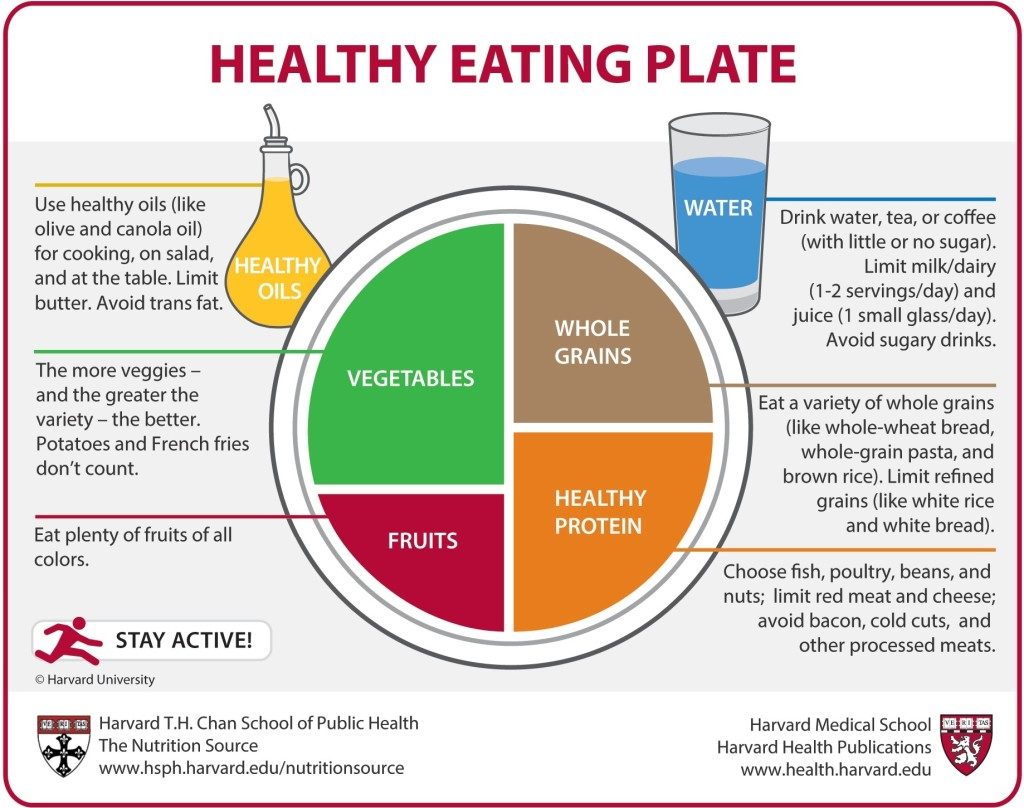
This model isn’t a diet or a complex system for calculating calories, fat grams or carbohydrates. The Healthy Eating Plate is a guide for creating healthy, balanced meals—whether served on a plate or packed in a lunch box.
Make most of your meal vegetables and fruits – ½ of your plate:
Aim for color and variety, and remember that potatoes don’t count as vegetables on the Healthy Eating Plate because of their negative impact on blood sugar.
Go for whole grains – ¼ of your plate:
Whole and intact grains—whole wheat, barley, wheat berries, quinoa, oats, brown rice, and foods made with them, such as whole wheat pasta—have a milder effect on blood sugar and insulin than white bread, white rice, and other refined grains.
Protein power – ¼ of your plate:
Fish, chicken, beans, and nuts are all healthy, versatile protein sources—they can be mixed into salads, and pair well with vegetables on a plate. Limit red meat, and avoid processed meats such as bacon and sausage.
Healthy plant oils – in moderation:
Choose healthy vegetable oils like olive, corn, sunflower, and avoid partially hydrogenated oils, which contain unhealthy trans fats. Remember that low-fat does not mean “healthy.”
Drink water, coffee, or tea:
Skip sugary drinks (they are a source of calories with little nutritional value), limit milk and dairy products to one to two servings per day, and limit juice to a small glass per day.
Stay active:
The red figure running across the Plate’s placemat is a reminder that staying active is also important in weight control.
Derechos de autor © 2011 Universidad de Harvard. Para más información sobre El Plato para Comer Saludable, por favor visite la Fuente de Nutrición, Departamento de Nutrición, Escuela de Salud Pública de Harvard,http://www.thenutritionsource.org y Publicaciones de Salud de Harvard, health.harvard.edu.”